
Which Products Deserve Your Time and Attention Today?
October 6, 2026 · 6 min read
By Meekskimahki, Founder of Marie for Sellers
A shop may have a few listings, hundreds, or even thousands. Each one can compete for your time and attention. If you are like me, you may also be balancing your business with a job, school, or family responsibilities. Running a shop can feel like another full-time job, and your time is limited.
Some listings may generate sales but leave you with weak margins. Others may receive traffic without converting visitors into customers. Then there are the listings with almost no data at all. When you sit down to work on your shop, which product deserves your attention first?
I have asked myself that question for years
As an Etsy and Shopify seller for more than five years, I have faced this question many times. As a solo parent and founder, I have also had to figure out much of it on my own. Looking back, I can see that I did not always give my time to the listings that needed it most.
I have learned that high sales do not automatically make a product the highest priority. High traffic does not necessarily mean a listing is performing well, and low sales do not automatically mean a product is bad. When a listing has no traffic, that number alone does not explain the cause. Sometimes, there simply is not enough evidence yet.
A listing has more to tell you than one number
It took me time to understand how much more I could learn by looking at several pieces of information together. I am still learning, but I now ask more questions before deciding what to change.
When reviewing a product, these are the things I consider:
- Is the listing clear and complete? I review the images, title, description, and information a customer needs before purchasing.
- Is the product receiving traffic? I look at visits or views and keep the metric and time period consistent when comparing listings.
- Are people buying? I consider sales alongside traffic, rather than treating either number as the whole story.
- What remains after costs? I review the selling price, product cost, applicable fees, and other relevant expenses. An estimate that leaves out expenses is not the same as final profit.
- How much evidence is available? I consider how long the listing has been active and how much customer activity it has received.
- Could timing matter? I consider seasonality and whether the product has had a reasonable opportunity to reach interested customers.
A listing health score can also be useful if you understand what it measures. I would treat it as one input alongside sales, costs, and customer behavior, rather than as a final verdict.
Three products can call for three different responses
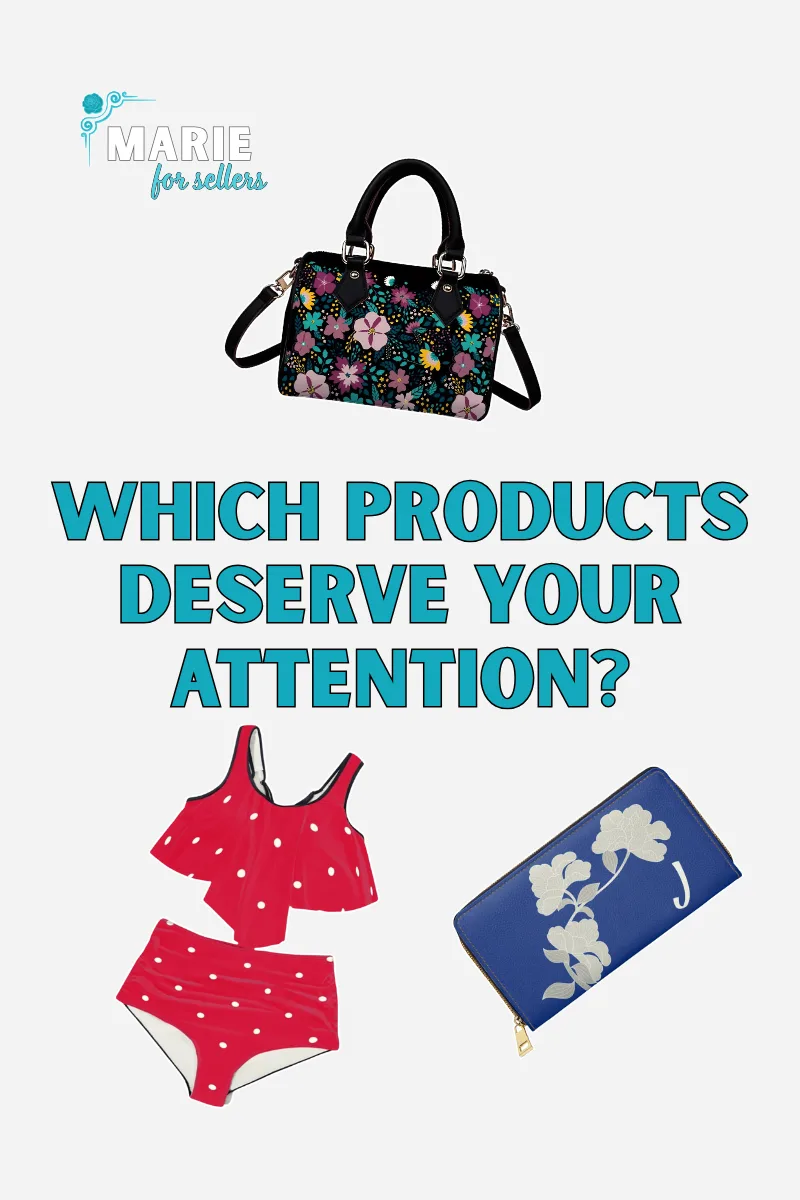
Wallets, swimsuits, and handbags are products I sell. Consider these three simplified situations to see how the same review process can lead to different next steps.
A wallet receives plenty of views but few sales
At first, the wallet might seem like the product to focus on because people are looking at it. But those views raise another question: what happens after someone opens the listing?
I would review the images, product details, price, shipping cost, and delivery expectations. I would also consider whether the traffic is coming from people who are actually looking for this type of wallet. The numbers alone cannot tell me which of these factors, if any, is holding back sales.
Rather than changing everything at once, I would choose one plausible issue to investigate, record any change, and review what happens afterward. This gives me a clearer basis for the next decision.
A swimsuit receives fewer views but makes several sales
Now consider a swimsuit with fewer views, several sales, and a strong estimated margin. In the example that prompted me to think about this, I did not consider the images especially strong. Yet the product was still selling.
That made me wonder whether customer demand was helping it perform. Sales suggest that some customers wanted the product, but they do not prove why those customers bought it. A small number of sales also does not establish that the same pattern will continue.
I would check the costs behind the estimated margin and consider the season before deciding what to do next. If the pattern holds, this product may deserve a measured effort to reach more relevant shoppers. I would be careful about making major changes to something that is already showing promise.
A handbag has almost no views and very little history
With a handbag that has little activity, my first step would be to check when it was listed. Very little data does not automatically mean it is new. An older listing can also have limited visibility.
If the handbag is new, it may need more time and a fair opportunity to reach shoppers. If it has been available for a while, I would look more closely at its visibility and listing information. Either way, I would avoid calling it a failed product based on almost no evidence.
I would keep it under review, make sure the basic information is complete, and set a date to look again. The next step is to gather useful evidence before making a larger decision.
I would not react as quickly now
Knowing what I know now, I would not change every listing simply because it has not sold recently. I would not assume traffic alone means a listing is working, or that no sales means a product should be removed. When the evidence is weak, I would acknowledge that uncertainty.
This does not mean leaving every product untouched. It means choosing a next step that fits what I actually know. One listing may need a closer review of the buying experience. Another may deserve more exposure. A third may need more observation before I can make a useful judgment.
This is why I built Marie for Sellers
I faced this problem for years while managing thousands of listings across my online stores. I kept returning to the same question: which products deserve my time and attention? Trying to answer it on my own became part of what led me to build Marie for Sellers.
Marie brings listing health, sales information, and product costs together so sellers can review their products with more context. Sales, traffic, listing quality, and costs can each tell you something, but looking at only one can leave out important information. Marie provides decision support, without guaranteeing outcomes.
Five questions to ask before changing a product
Before you make your next listing change, take a moment to ask yourself:
- What evidence do I actually have?
- What does the listing data tell me?
- What do the sales tell me?
- What does the product cost me?
- Is there enough information to make a decision yet?
You can use these questions whether you review your shop manually or with a tool. The aim is to choose a useful next step with the information available, while being honest about what you still need to learn.
Learn more about Marie for Sellers
Marie for Sellers is currently in beta for Etsy and Shopify sellers. If you would like updates about beta access and reviewing your shop with your own listing, sales, and product-cost information, join the waitlist.
Join the Marie for Sellers waitlist
About the author
Meekskimahki is the founder of Marie for Sellers and an e-commerce business owner who manages Etsy and Shopify stores. She built Marie after experiencing firsthand how difficult it can be to decide which products deserve attention when listing, sales, and cost information live in different places.